The Quiet Before the Note
First, the room must be quiet. Not silent. Quiet.
Silence is an absence. A void. Quiet is a presence. A held breath. A fullness of potential, like the space between the lifting of a conductor’s baton and the first, trembling note of the string section. It is a medium. A fertile dark.
Into this quiet, we introduce not sound, but a tool. A key. A universal remote. To the world, a plastic chore. To the ear, a silent guardian. A bridge between the human hand and the soul of the machine.
This is not programming. It is cultivation. A shaping of experience from the raw clay of convenience.
Let the Cacophony Lie Still
A dozen remotes on the table. A chorus of nervous chatter. Scattered, blinking LEDs. Conflicting geometries. We seek a single, resonant voice. One instrument to conduct the orchestra of your realm.
The Heft of Intention
Begin with the instrument itself. It must have weight. A tangible promise.
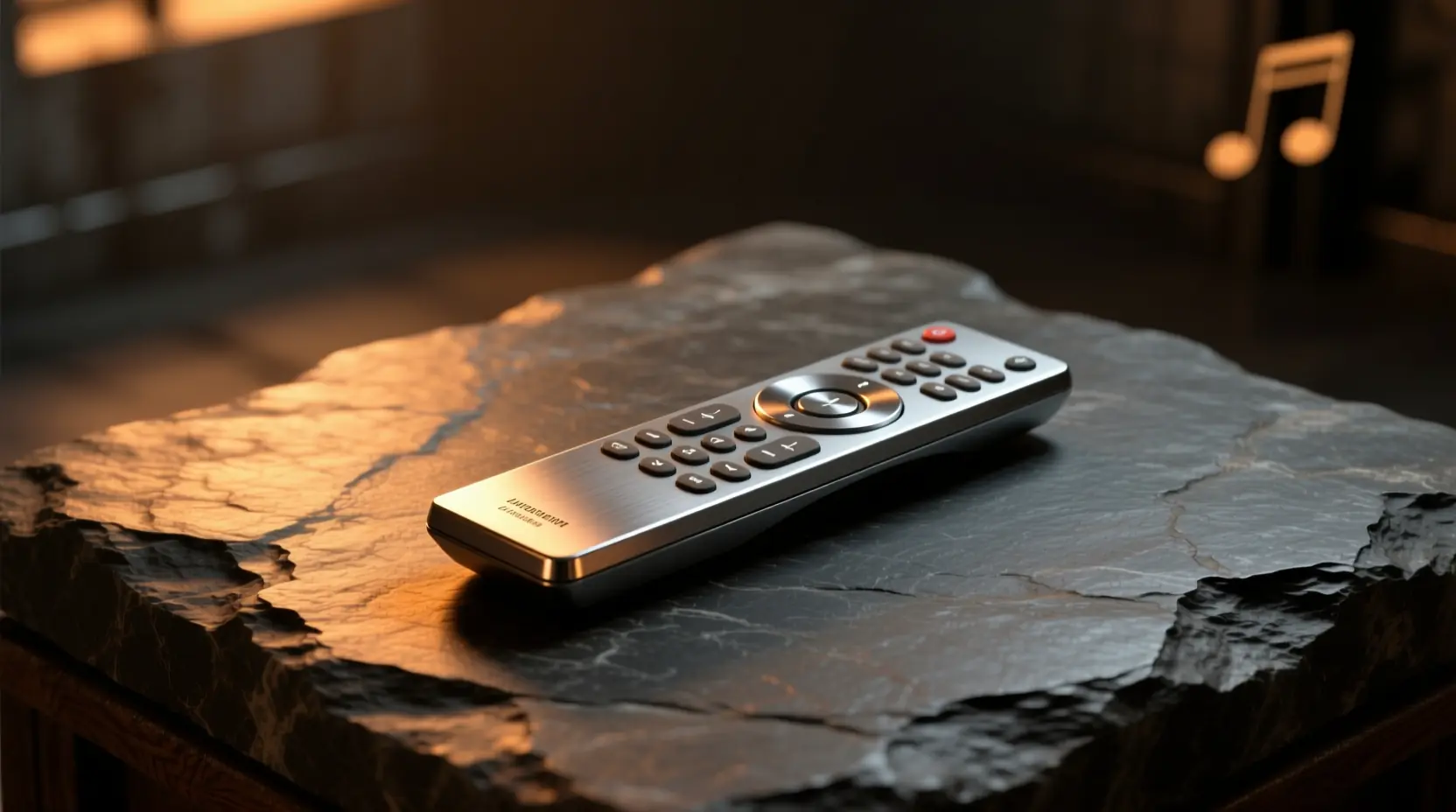
Cold, heavy steel. Brushed aluminum, cool to the touch. The warm grain of real walnut, fitted to the palm like the neck of a cello. This matters. The heft tells the hand: this is deliberate.
Feel the buttons. Their journey. A precise, damped travel. A soft, definitive click you feel in your fingertip more than you hear. This tactile feedback is the first note in our symphony. The pre-click. The inhalation before sound.
Avoid the chirping, rubbery buttons of the disposable world. They are digital noise, translated into the physical. We are eliminating noise. In every form.
The Glow That Does Not Shout
Power on. The screen, if there is one, should dim to the deepest obsidian. A pool of dark water. It should only illuminate when called—a gentle, amber summons, not a harsh, blue-white glare.
Light has a sound. We know this.
Harsh light is a cymbal crash. A shout. Gentle light is a bowed vibraphone. A whispered invitation.
Mapping Sacred Spaces, Not Spreadsheets
We do not “program.” We map. We are cartographers of flow.
Think of your realm not as devices, but as atmospheres. Moods held in different vessels.
The main sanctuary. The den. The kitchen. The patio breathing with night air. Each, a unique instrument. The powerful receiver, with its heat sinks like the gills of a deep-sea creature. The slim, elegant streamer, a digital monk in meditation. The amplifiers, solid and patient as stone plinths.
Begin with one room. The heart room.
Assign a device to each button not by its technical name—AVR, STRM, CD—but by its essence. Sanctuary. Source. Air. Perhaps just a single, elegant icon. The connection is not a cold code, blasted from an LED. It is a careful, patient introduction.
The Learning as Listening
Use the learning mode not as mimicry, but as listening. Point the old remote at the new. Press Play. See the new remote’s sensor glow, a tiny red pupil, absorbing the pulse of light. It is learning a language. A dialect of command.
Do this slowly. Deliberately.
With each learned command, feel the new remote growing warmer, more alive with purpose. It is no longer a blank slate. It is remembering.
The Choreography of a Single Breath
Here lies the true craft: the macro. A single button press that unfolds an experience like a lotus. This is our magnum opus.
Consider Listen. A single, broad button on the upper face, inlaid with a different texture—smooth mother-of-pearl against brushed metal.
You press it.
One. The amplifier awakens. Not with a thump, but a soft, relayed click from the other room. A distant friend answering the call.
Two. The streamer rises from its digital slumber, its tiny display blooming a soft, welcoming number.
Three. The receiver switches its path, a silent, electronic doorway opening.
Four. The motorized screen descends, a hushed, mechanical whisper.
Five. The lights dim by seventy percent. The world draws its focus inward.
All of this. In the space of one breath. One application of intentional pressure from your thumb.
You have not commanded a machine. You have conducted an environment into being. The remote has vanished into the result. It is the wand of the magician, unseen after the spell is cast.
The Empathy of the Volume Wheel
The volume control is an act of empathy. A single rocker. Or a satisfying, weighted wheel.
Rolling it up should feel like the sun slowly warming a landscape. Rolling it down is the gentle settling of dusk. We program limits. Soft ceilings. So a sudden, accidental press cannot shatter the quiet with a blast of sound—a violence against the atmosphere.
The remote must protect the ritual.
The Simultaneous Song of Separate Rooms
This is polyphony. The gentle art of layered atmospheres.
The patio wishes for jazz. A cool trumpet tracing the lines of the evening star. The kitchen, a bubbling pot of Italian folk songs. The sanctuary, the deep, unfolding silence between the movements of a classical adagio.
Each zone must feel independent, yet harmonized by your intent.
We create not scenes, but climates.
Evening Air. Culinary Light. Deep Listen.
Each climate is a unique tapestry of zone powers, sources, and volumes. The remote holds these climates ready, like different chapters in a book of hours. The transition between them must be graceful. A fade-out in one room, a crossfade-in another. Not a jarring cut.
The remote, tuned with soul, is the steward of the crossfade of life.
The Final Test: The Art of Disappearing
The final test is not of function, but of dissolution.
Place the remote on the table. The walnut grain catches the low light. An object of beauty, at rest. You pick it up. Its weight is familiar, a companion. You press Listen. The room transforms. You press Pause. The sound ceases, but the atmosphere remains, hanging in the air like the scent of rain.
You set the remote down.
And you forget it.
It has done its job. It has woven itself so seamlessly into the ritual of listening, into the desire for sound and for peace, that it disappears. It is no longer a “universal remote.”
It is the handshake between your intention and the music. The quiet keeper of the keys, sitting in the dark, holding the potential for a thousand worlds of sound within its cool, heavy frame.
It waits. Full of promised echoes. For the next touch. The next breath.
The next, perfectly conducted moment of quiet, soon to be filled.