The Ritual of Subtraction
We sit in prepared silence. We have chased out the hums, dampened the tremors, severed the threads of electrical gossip. Our rooms become vessels for absence. The air, still. The light, low. Our hands rest on chair arms, palms open, ready to receive not sound, but its ghost—the intention that precedes vibration. This is the negative space from which music is carved. Every component, from the massive amplifier heat-sink to the isolated speaker spike, is a priest in this liturgy of removal. Each one guards a border. Each one whispers: here, interference ends.
The Bridge in Your Hand
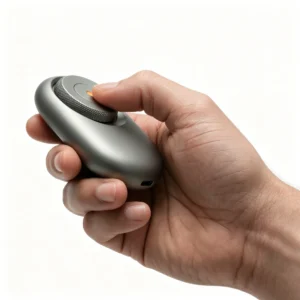
And then, your fingers close around it. The remote. The final threshold. The last mechanical synapse between your will and the wave. In this moment, the entire philosophy of listening condenses into a single, held object. Its material is not a casing. It is a covenant. Plastic chatters. Aluminum listens.
The Whisper in the Shell
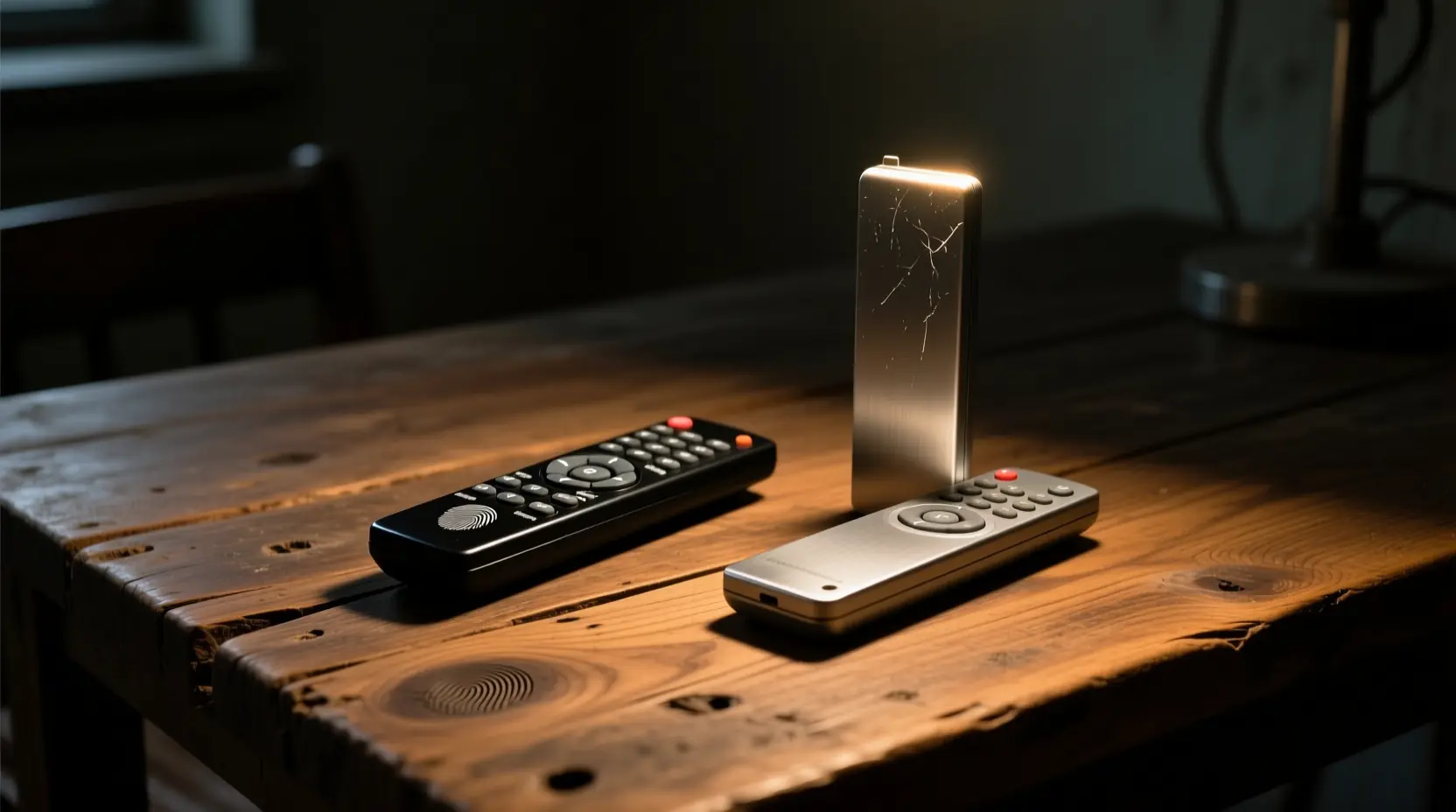
Take the hollow one first. Feel its lightness—a kind of poverty. Press a button. Listen with your fingertips. There, beneath the plastic click, a faint, brittle resonance. A high-frequency shudder trapped in the thin walls. This is the shell singing along. It is microphonics: the physical translating into the electrical, a sympathetic vibration to your own pulse, to the subsonic breath of the room. It is a veil, woven from the very tool meant to draw the curtain aside. This whisper is the first coloration. The first lie.
The Cold, Dense Truth
Now. Heft the one milled from solid aluminum. Feel its mass pull downward, a gentle allegiance to gravity. This is not weight for spectacle. This is inertial dampening. A sinking stone for chaotic energy. Its coolness is not the inert cool of plastic. It is the active, thirsty cool of a heat sink, yearning to dissipate, to neutralize. When you press a button here, the action is a single, decisive event. The *click* is born, felt, and hushed—swallowed whole by the mass that cradles it. The mechanism is sealed in a silent tomb. No ring. No resonance. Only the pure, electrical impulse of your command, untouched.
The Geometry of Intent
The listening ritual is tactile. It is knurled volume knobs under thumb, the satisfying detent of a source selector, the brushed texture of a faceplate catching lamplight. Your hand is part of the circuit. The remote is its interface.
The Forgotten Tool
Plastic is forgettable. Its texture is a non-event. Slightly greasy, uniformly smooth, it asks for nothing and offers less. It is a transactional device. It closes a circuit. It does not honor the gesture.
The Conductor’s Baton
But aluminum? It conducts. Not just electricity, but intention. Its cool metal warms slowly to your skin, a tiny thermal ritual. Machined edges speak of lathes and tolerances. The buttons travel with a precise, damped resistance—a mechanical affirmation. Using it feels not like pushing, but like turning a fine microscope knob, bringing the sonic image into perfect, critical focus. It slows you down. It makes the act of raising the volume a conscious, respectful gesture towards the crescendo. It is the conductor’s baton for the orchestra in your head.
The Unseen Architecture
This is the geometry of intent. A plastic remote is a stick figure. A few lines denoting function. An aluminum remote is architecture. It has mass, density, thermal properties. It shapes space—both the physical space around it and the psychic space of the ritual. It stands as a bulwark against the casual, the distracted, the mundane. It says: what happens next is singular.
The Guardian of the Threshold
Every listening space has a liminal point—the moment you cross from the world of errands and emails into the world of sustained attention. The remote is the guardian of this threshold.
The Permissive Sentinel
A plastic guardian is permissive. It lets the noise of the world trail in behind you. Its hollow core echoes with the forgotten stresses of the day. It is a part of the system, yet alien to its soul—a cheap lock on a cathedral door.
The Absolute Sentinel
An aluminum guardian is absolute. Its density forms a barrier. Its thermal mass absorbs stray energy. Its very presence is a command: silence. In your hand, it is a cold, smooth key. It does not simply start the music. It unlocks the listening. It confirms that the outside world—with its chaos, its compromises, its endless digital shout—has been sealed out. Here, in this chair, with this heavy talisman, you have arrived.
The Beauty of the Uncolored
We speak of transparency in our chains. Of windows clean of smear. We seek the uncolored. Yet, we so often hold a colorist in our palm. The plastic shell, ringing at its own frequency, painting its own faint, dissonant hue onto every command. Choosing aluminum is not an aesthetic indulgence. It is the final, logical step in the pursuit of neutrality. It is the choice for the material that best embodies nothing. That best gets out of the way. It is the beauty of the uncolored, given form.
The Resonance of Craft
Our systems are altars to resonance—but only the intended kind. The resonance of a tuned port. The resonance of a violin’s wooden body. We surround ourselves with materials that tell a story: warm wood, hand-stitched leather, brushed metal. They speak of nature, of time, of human hands. They quiet the mind before the first note.
The Discordant Note
A plastic remote is a discordant note in this symphony of craft. It speaks of the injection mold, the assembly line, the cost-saving calculation. Its story is: this part was not deemed worthy. In a sanctuary built to honor worth, its presence is a subtle sacrilege. A whisper of indifference in a temple of focus.
The Harmonious Object
A machined metal remote continues the story. Its brushed lines catch the light like the grain of oak. Its weight mirrors the substantial feel of a turntable’s cueing lever. It speaks the same language as the amplifier’s milled faceplate. It says the care did not stop at the obvious. It says every point of contact—every single interface between you and the truth of the recording—has been considered, refined, and honored. It is not a component. It is an instrument.
The Silence Itself
In the end, we do not chase sound. We chase the perfect silence from which it can emerge, pristine and whole. We build our systems to create a void, a fertile blackness where music can spontaneously generate, as if for the first time.
The remote is the last gatekeeper of this silence. When you press play, you are not starting a machine. You are parting a curtain. The material of that curtain matters. Plastic rustles. Aluminum hangs still, heavy, and mute.
Choose the mute guardian. Choose the cool, dense, absorbent stone. Choose the object that doesn’t just allow silence, but embodies it. For in that final, chosen stillness—in the cool weight in your hand, in the hushed, definitive click—you will hear the most beautiful sound of all.
The sound of nothing at all. Which is the beginning of everything.