The Threshold as a Held Breath
A door, unadorned. A numeral in brushed metal, cool and definite beneath the pad of your thumb. This is not an entry point, but a transition. The external world—its pace, its percussion, its perpetual forward lean—is gently asked to wait. Step across. Feel the shift in the air, a new density of quiet. This is not a room. It is a sanctuary composed of negative space and intention, a vessel waiting to be filled with the simple, profound act of being. Welcome.
The First Dialogue: Weight, Motion, Silence
The handle communicates before words are possible. Its heft is intuitive, a smooth, cold weight that promises solidity. The lever moves through its arc with a fluid, mechanical grace—no stick, no protest. The latch engages with a hushed, definitive click. This is the first handshake. It says, what lies within is considered, is secure, is yours. As the door seals behind you, listen. Not a clatter, but a soft, final sigh. The corridor’s murmur dissolves into a new, fertile silence. This quiet is not an absence. It is the first and deepest courtesy—the gift of a blank canvas.
A Plinth for the Journey’s End
Just inside, a bench. Not an afterthought, but a deliberate plinth of oiled oak or a felted wool so dense it absorbs sound. Its purpose is both practical and ceremonial. Here, you may lower your bag—the companion of your transit. To place it down is to begin the act of unpacking not just belongings, but the self. It is an invitation to pause in the liminal space between traveler and guest. Good design understands the poetry of transition; it allows for the gradual shedding of the road, the conscious release of the shoulders, the unclenching of the hand around a key.
The Calculus of Comfort: A Sun on a Dial
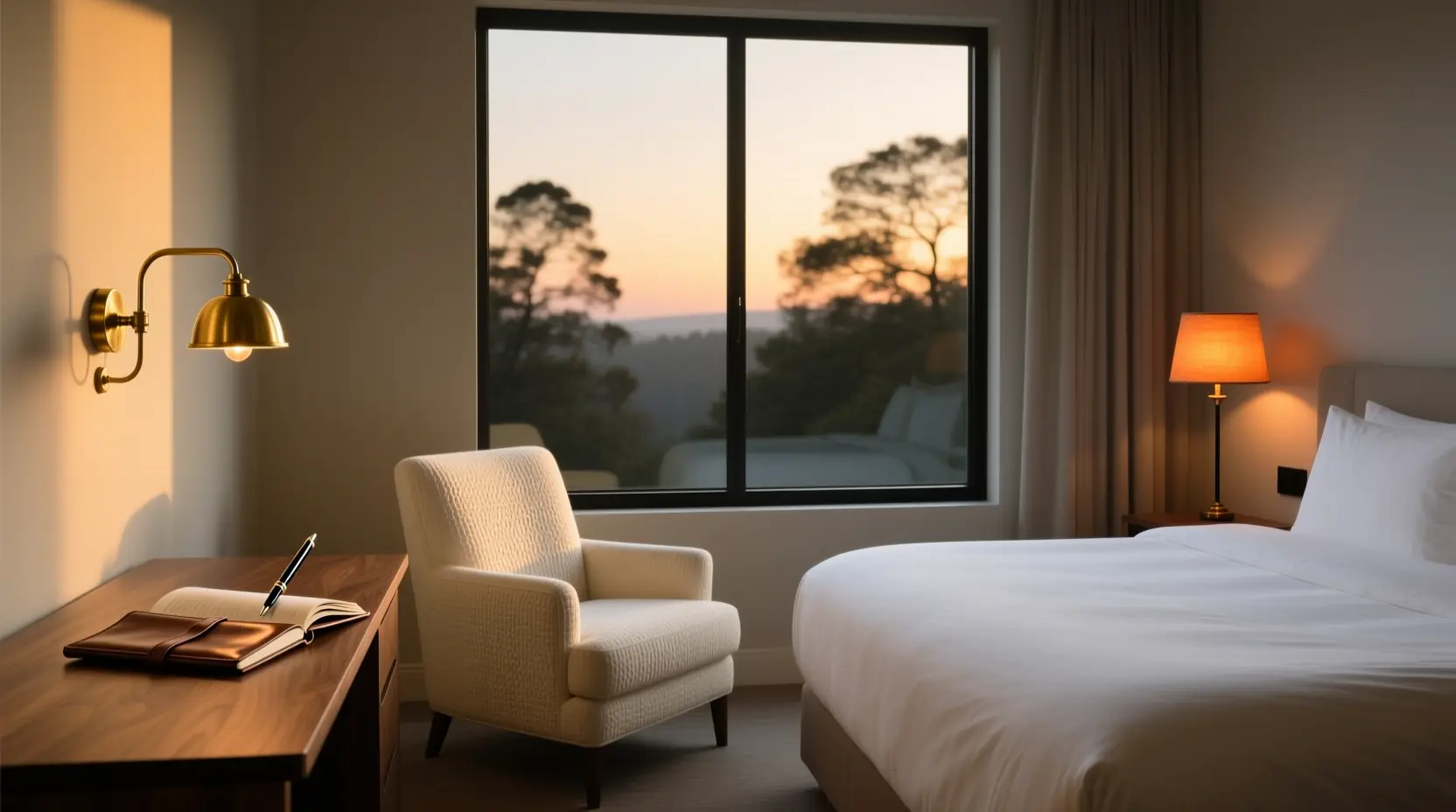
Observe the light. It does not descend from a single, interrogating source. It is a layered composition, a quiet symphony. A diffuse glow, as from a shrouded sun, softens the room’s edges. By the armchair, a torchère casts a precise arc over a shoulder, perfect for the turning of a page. At the bedside, a sconce with a matte finish offers a contained pool of gold, its dimmer a satisfying, rotary dial of etched metal. You are granted sovereignty over the sun. This is the calculus of comfort: light should serve, never command. It should sculpt the air, define territories for reading, for thought, for the slow fall into dream.
The Textile of Trust: Where the Body is Remembered
Approach the bed. It is a landscape. The linens are the color of fresh snowfall at dawn, woven with a thread count that feels not slick, but cool and dry-soft against the skin. Their weight is a substantial embrace. The blanket, a cellular weave or lightweight merino, offers warmth without heft, breathable as a second skin. And the pillows—a curated selection. One is firm as a supportive palm, another downy as a cloud. This is where hospitality becomes physical. The body, so often an afterthought in the aesthetics of space, is here remembered, honored, cushioned. To sleep here is not to lose consciousness, but to be gathered in.
The Surface of Things: The Quiet Dignity of Use
Move through the room. Let your fingertips read the narrative of texture. The desktop is solid oak or walnut, its grain a map of slow-grown years. It bears a fine-grained, matte finish that resists the cold kiss of condensation, the faint ring of a cup. There is a profound pleasure in this tacit resistance to marking. The drawer glides open on full-extension, silent runners—a smooth, weightless revelation. Inside, perhaps, a leather-bound notebook with paper thick as cream, and a pen that balances just so. These are not amenities; they are permissions. Permission to write a line that matters, to sketch an idea, to feel the quiet dignity of a considered object. Even the humble coaster, cut from cork or slate, feels intentional—a small, steadfast ritual of care.
The Niche for the Quiet Cup
In a corner, by a window framing a fragment of sky, the armchair. Not oversized, but precisely scaled—an embrace for one. Its fabric is a robust cotton-linen, chosen for its honorable aging, for the way it will grow softer, not shabbier. Beside it, a small, sturdy table, its width calculated for a book, a pair of glasses, a cup. This is the room within the room. Here, you may sit with the steam of a tea—the leaves housed in a small, tinned caddy—and watch the light fail. This niche serves no urgent need. It serves the human need for pause, for the gentle separation from one’s own itinerary. It is the sanctuary’s still point.
The Bathroom as a Refreshed Beginning
The transition should feel like a continuation, not a shift into clinical sterility. The floor is warmed, a subtle, radiant fact discovered by bare foot. The fittings are brushed nickel or matte black, their forms clean, their function intuitive. Water does not splutter from the tap, but emerges in a wide, soft cascade. The towels are thick, looped cotton, absorbent and heavy—a wrap of comfort. The soap is a modest, perfect cake, milled with cedar or grapefruit, its scent clean and grounding. Every surface is chosen for its ease, its resistance to the ephemeral mark, its quiet dignity. This is a space for renewal, designed not to impress, but to efficiently and beautifully facilitate a refreshed beginning.
The Unseen Harmony: When the Space Recedes
And so, as dusk settles its weight, you will feel it—the quiet hum of a profound harmony. The cupboard door closes flush and silent. The thermostat responds with a gentle, obedient click. The blackout curtain glides on its track, sealing the world away without a struggle. This is the pinnacle of the art: when the design, the objects, the very space itself, recede. They perform their duties with seamless grace, asking for no thanks, requiring no negotiation.
In this carefully composed stillness, a subtle alchemy occurs. You are no longer a consumer of a space. You become its inhabitant, its temporary soul. The fatigue you placed on the bench by the door has dissipated. You feel, perhaps for the first time that day, truly located. Not just in a city, but in your own presence.
This is the essence. It is not luxury as spectacle. It is luxury as profound consideration. It is the understanding that true care is woven into the weight of a tumbler, the cast of a shadow, the texture of a linen napkin. It is the art of preparing a space so thoughtfully that it does not feel prepared at all, but simply, perfectly, awaiting. And in that await, you find the most precious offering: not a place to stay, but a place to become, once again, yourself. The room, in its understated wisdom, holds a mirror to your own need for peace, and answers it, not with a shout, but with a whisper that lingers in the air: Rest now. All is attended to.