The Hand Finds What It Needs
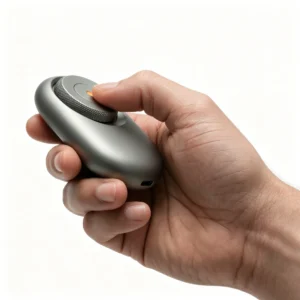
A hand reaches. Not grasping. Not demanding. Simply extending, with the gentle weight of a long day or the soft fragility of mending bones. The space it finds is quiet. The object it meets is cool. Smooth, like a stone warmed by the sun and then cooled by the evening. A matte finish, drinking the light, refusing glare. Beneath tired fingertips, buttons rise—gentle, distinct mounds. A geography of comfort, learned by touch alone. This is not machinery. This is a held breath. A small, sure thing in a room of uncertainty.
The Humble Gatekeeper: A Door That Sighs Shut
We think of faces, of fronts. Rarely do we consider the hidden back, the quiet guardian. The battery compartment. In a home, it might be an afterthought—a flimsy click, a plastic catch that protests, then fails. A small, rattling betrayal.
But here, in this space of healing, every sound is a note in a patient’s day. A rattle is a jarring discord. A loose panel, a tremor of neglect. The promise of a remote begins here, in this small, secret place. It must close not with a snap, but with a sigh. A soft, definitive affirmation. I am whole. I am secure. Perhaps a single, recessed screw. A latch that finds its groove with a snug, satisfying fit. This is the first, unspoken vow: The light you seek is safe within me. Your connection will hold. It is a gift of focus, too—freeing the nurse’s hands from constant mending, letting their compassion flow to deeper needs.
Where the Cloth Glides Without Hesitation
Now, follow the path of the cloth. Soft, damp, moving with a caregiver’s deliberate care. Cleanliness here is not a chore; it is a ritual. A renewal of safety. The remote must welcome this grace. It must offer no harbor, no shadowed crevice for fear to settle. Sharp seams, deep grooves, tiny screw heads that clutch at fabric—these are not design flaws. They are anxieties given form.
A remote crafted for healing is shaped from a single, gentle thought. Wipeability. Its resin, inherently guarding. Its surfaces, flowing into one another like calm water. The battery cover sits flush, seamless. If a screw exists, its head is level, smooth, an invitation for the cloth to pass over uninterrupted. The glide is silent, sure. It leaves behind not just cleanliness, but confidence. A quiet proclamation that this object, this companion, is a sanctuary for the hand.
The Dignity of a Reliable Response
Loneliness has a particular texture in a hospital room. It is in these moments that the remote becomes a tether—not just to a screen, but to agency. To choice. To a self that exists beyond the bed. To press a button and command louder, softer, silence. This is a profound dignity. It is shattered by a dead battery. That press into inert silence feels like a small abandonment. The world, once again, turning away.
The Guardian Against Small Sorrows
A secure compartment is the guardian against this quiet sorrow. It ensures the connection is constant. The “Volume Up” will always cushion a jarring sound. “Mute” will always grant instant peace for a whispered conversation. “Power” will always be a reliable door to a chosen world. This reliability is a form of deep respect. It says, I am here. I am ready. Your comfort is my purpose. For the caregiver tending to many such quiet keepers, this reliability weaves a rhythm of calm. A simple, scheduled check replaces frantic searches. The rhythm of care flows on, unbroken, like a steady breath.
The Garden of Calm: Tending a Fleet of Quiet Keepers
Imagine the hospital’s remotes not as a collection of devices, but as a garden. Each room, a plot of peace. Each remote, a plant meant to thrive and offer shade. The fleet manager is the tender gardener. Their goal is not control, but cultivation—an ecosystem where each element supports a larger calm.
A garden of remotes with secure, simple compartments is free of weeds. No thicket of mismatched batteries. No scatter of broken covers. No storms of emergency repair. The gardener moves with a gentle, predictable rhythm. Their touch is preventative, kind—a refreshing of power before it fades, a smooth passing of the cloth. This order is not cold. It is profoundly empathetic. It builds a foundation of operational quiet so the human caregivers can pour their souls into the personal, the spoken, the silent holding of a hand. The technology recedes, perfectly functional, asking for nothing, so that humanity can step forward, fully.
The Craft of Being Unnoticed
In the end, the highest compliment such an object can receive is to be unnoticed. It should rest in the palm, a natural extension of will. Its buttons should offer a soft, positive depression—a quiet yes sent back to the finger. Its surfaces should feel safe. Its battery compartment, a forgotten promise, kept so faithfully it never enters the mind.
This is the quiet craft. The work of those who design not for flash, but for feeling. Who select materials for their gentle touch. Who engineer latches for their enduring click. Who understand that in a landscape of complex machines and weighty emotions, the simplest tool can carry the heaviest weight of comfort.
It honors the journey of healing, which is so often a journey of waiting. Of patience. Of small comforts—a cool surface, a reliable button, a familiar voice from a screen—stacked one upon the other until they finally, softly, outweigh the fear or the pain. In this sacred space, a reliable remote is a tiny, steady flame. A reminder. Some things can be controlled. Some connections do hold. And in the quiet of a dim room, the simple power to summon a gentle light, a familiar scene, is not a small thing at all.
It is a profound gift. Whispered, not shouted. Held in the hand, and in the heart.