Upon Entering the Quiet
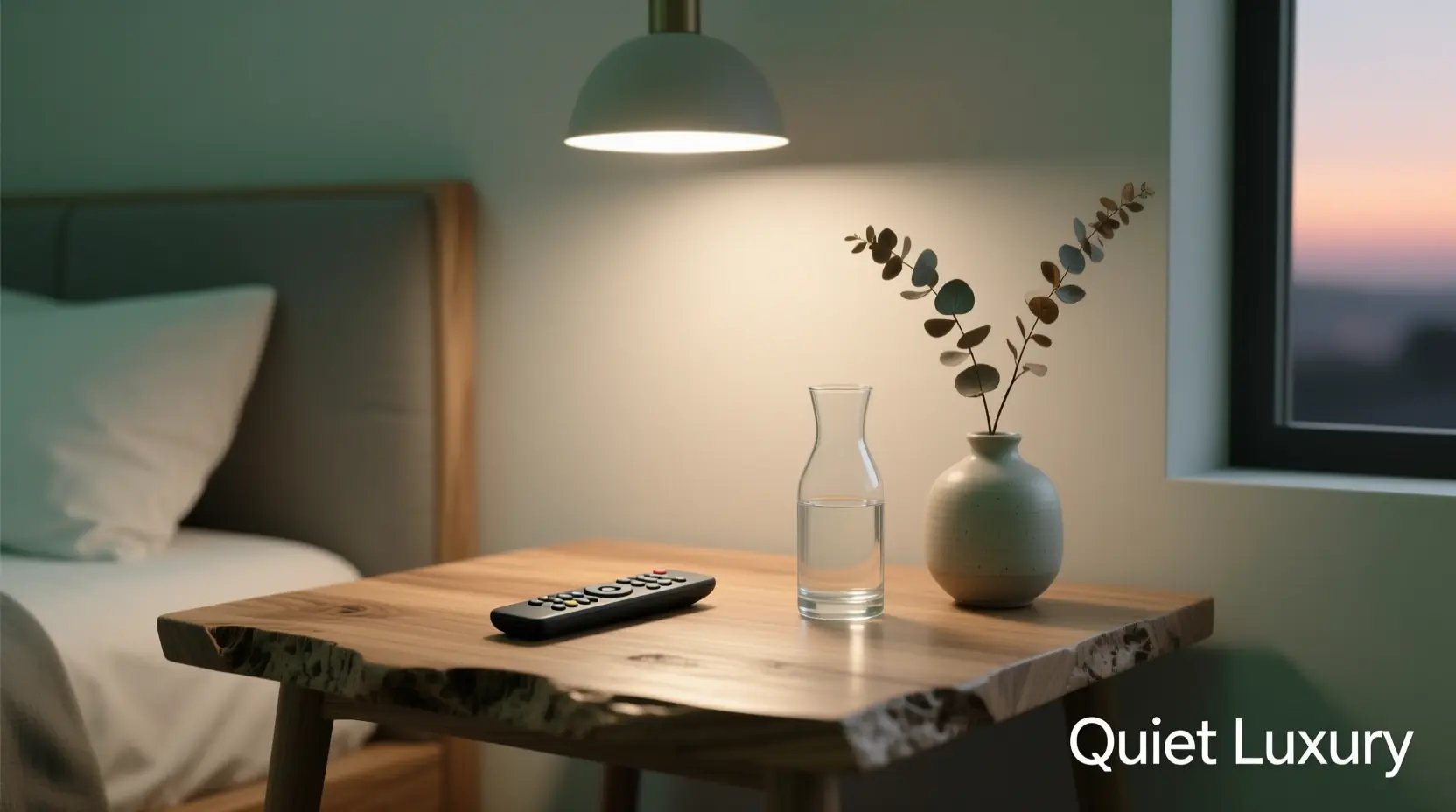
You cross the threshold. The door hushes shut behind you, a soft seal against the world. Here, the air is a different texture—cool, still, carrying notes of oat-milled linen and the faint, clean scent of rain on stone. Your gaze travels, not in search, but in reception. The deliberate drape of a curtain. The patient geometry of a chair placed for contemplation, not merely sitting. And there, on the low ashwood table, beside a carafe of water and a single stem of hellebore: an object. It rests with intention, its edges softened by the fading afternoon light. It is not a device, but a key. To the room’s final, gentle layer. Its story is written not in megapixels or megahertz, but in the quiet language of arrival.
The Umbilical Tether: An Early Rupture
Once, you had to approach. To rise from the embrace of the armchair and submit to the machine’s physicality—a rubber-sheathed cord, a tether to a great wooden monolith. The act itself was a small violence against the sanctuary. A rupture in the quiet you had just begun to cultivate. The room was split: here, solace; there, obligation. The television was a piece of furniture that demanded audience. This was not care; it was a transaction. One felt, in the creak of the floorboard, the stark divide between the comfort of the space and the command of the thing within it.
The First True Gesture: A Click in the Twilight
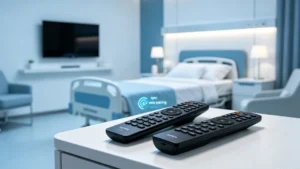
Liberation arrived as a whisper. A small, weighty block in the hand, promising dominion from a distance. ‘Space Command.’ Its name was an ode to new frontiers, but its gift was profoundly earthly: the permission to remain nestled. This was the first, true architectural shift in hospitality. The console could now recede, becoming a framed aperture in the cabinetry. The remote itself—a solid, satisfying presence, its buttons like polished pebbles—was a covenant. It said, We have considered your ease. Sovereignty was returned, not with a shout, but with a soft, ultrasonic click.
The Necessary Thicket: An Era of Illuminated Paths
Choice blossomed, and with it, a landscape of rubber. The remote became a topography of functions—a necessary, sometimes daunting, map. In the dim of a hotel room, it was a puzzle of braille under the thumb. Yet, in refined spaces, one might find it sheathed in supple leather, or its essential buttons aglow with a warm, amber light. These were not features; they were gestures. A recognition that utility, in abundance, must be guided by grace. They whispered, We know the way can be complex. Let us illuminate the path for you.
Sculpted Silence: The Return to Essence
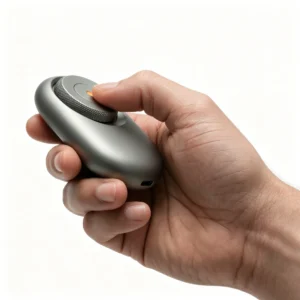
Then, a conscious paring. A return to the essential line. The object shed its clamor for a matte, fine-grained silence. It became a sculpture for the hand, cool and dense, its weight speaking of integrity, not battery bulk. Buttons were distilled to intuitive glyphs, etched with a jeweler’s precision. This was no longer an interface; it was an artifact of a curated life. It performed a quiet symphony—television, sound, light—conducted into a single, harmonious chord. The room exhaled. Attention could flow back to the weave of the wool throw, the pool of lamplight on the page, the slow dusk beyond the window.
The Voice in the Room: The Dissolving Boundary
A simple phrase. “A little music.” “The evening news, please.” And the object itself began to dissolve. The physical form remained, a pleasing token, but the barrier between desire and atmosphere simply melted away. This was the pinnacle of understated service: the removal of the intermediary. It was as if the room itself listened, attuned to the rhythm of your breath. No fumbling, no glare of a menu to pierce the calm. It recalled the most perfect hospitality, which is often invisible, anticipatory. The technology became ambient, as natural as a drawn bath.
The Anticipatory Glow: Intelligence as Restraint
We arrive now at the next quiet evolution: the object that learns. Not with fanfare, but with perception. It knows your preference for the morning forecast at a murmur. It senses the prolonged pause in a film and responds by deepening the room’s twilight, as if drawing a blanket over the day’s shoulders. This is technology in its most hospitable form—not smart, but sensitive. It attends to the cadence of your rest, the unspoken rituals that define true repose. The physical artifact, a weighted stone in the palm, becomes a talisman. Its intelligence lies not in display, but in its profound restraint, its study of how you inhabit silence.
A Keystone, Not a Commodity
So, when you next enter a space of considered calm and find this object placed with intention, see it for what it has become. It is the keystone in the architecture of your sanctuary. Its journey—from demanding tether to perceptive companion—traces our deepest longing for an environment that holds us without asking to be held. It is the beauty of seamless utility. A thing that works so perfectly, with such a quiet and tactile grace, that it asks nothing of you but your own peace. It is the gentle, final gesture that completes the room: a considered weight in the palm, allowing you to draw the world close, or let it fade away, with a touch, or a word. And remain, perfectly, at rest.