The Threshold Arrives in the Palm
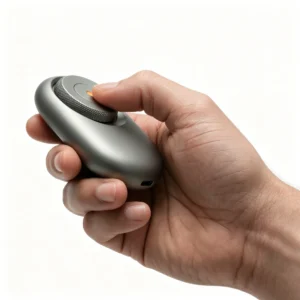
The suitcase rests by the door, its weight released. The coat finds its hook. A slow, deep breath—the air tastes different here, of stillness and of wood, of linen freshly aired. The journey settles in the bones. In this curated quiet, an object awaits. Not a command, not a plastic plea for attention, but a key. Cool, substantial, shaped by intention. To hold it is the second welcome. Its texture speaks of fine-grained stone, of a matte finish that drinks the lamplight, never shouts a reflection. Its weight is a quiet promise: here, you are held. This is the beginning of the unspoken dialogue between guest and room. The remote control, in its highest form, is not a gadget. It is the first chapter of rest.
Where Utility Wears a Gentle Face
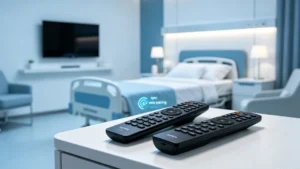
Consider the alternative: a diaspora of black plastic on the table. A cacophony of buttons, a confusion of loyalties. It is visual static, the opposite of calm. The act of consolidation is therefore an act of care. It is the folding of chaos into order. The single, considered object that remains is an artifact of peace. It does not list its features; its form is its first virtue. The curve fits the hand not by accident, but by design. The seam where two materials meet is precise, silent. It feels, in the dimming light, like something found, not furnished.
The Architecture of a Single Gesture
In the best spaces, complexity is resolved into simplicity. A hundred possible paths converge into one intuitive way. This is the soul of the macro: the crafting of a moment from a sequence of tasks.
The Evening Ritual, Encoded
One press. A sigh of relays, barely audible. The screen blossoms with a slow fade, not a jarring blast. The speakers exhale a low hum, ready. The lamp by the armchair dims, its light pooling like honey. The ceiling lights retreat. This is not a series of commands; it is an environment, conjured. ‘Evening.’
Another. A deeper quiet descends. The light withdraws further. The image dissolves to black. The speakers fall silent. ‘Goodnight.’ It is the digital equivalent of drawing the drapes. It is a prepared path toward darkness, offered without a word.
The Unseen Messenger
True elegance often lies in what is absent. RF capability is this: the grace of hidden things. It is the signal that travels through wood, around corners, from the pocket of a robe in the hall. It allows the machinery—the players, the processors, the hubs—to vanish into a dedicated drawer, behind a panel of fitted joinery. The function remains, omnipresent, while the visual field stays clean, serene. The room is a composition of rest, not a showroom of components.
The Language of Intuitive Ground
We speak in glances, in gestures. The finest objects learn this language.
The Companion That Anticipates
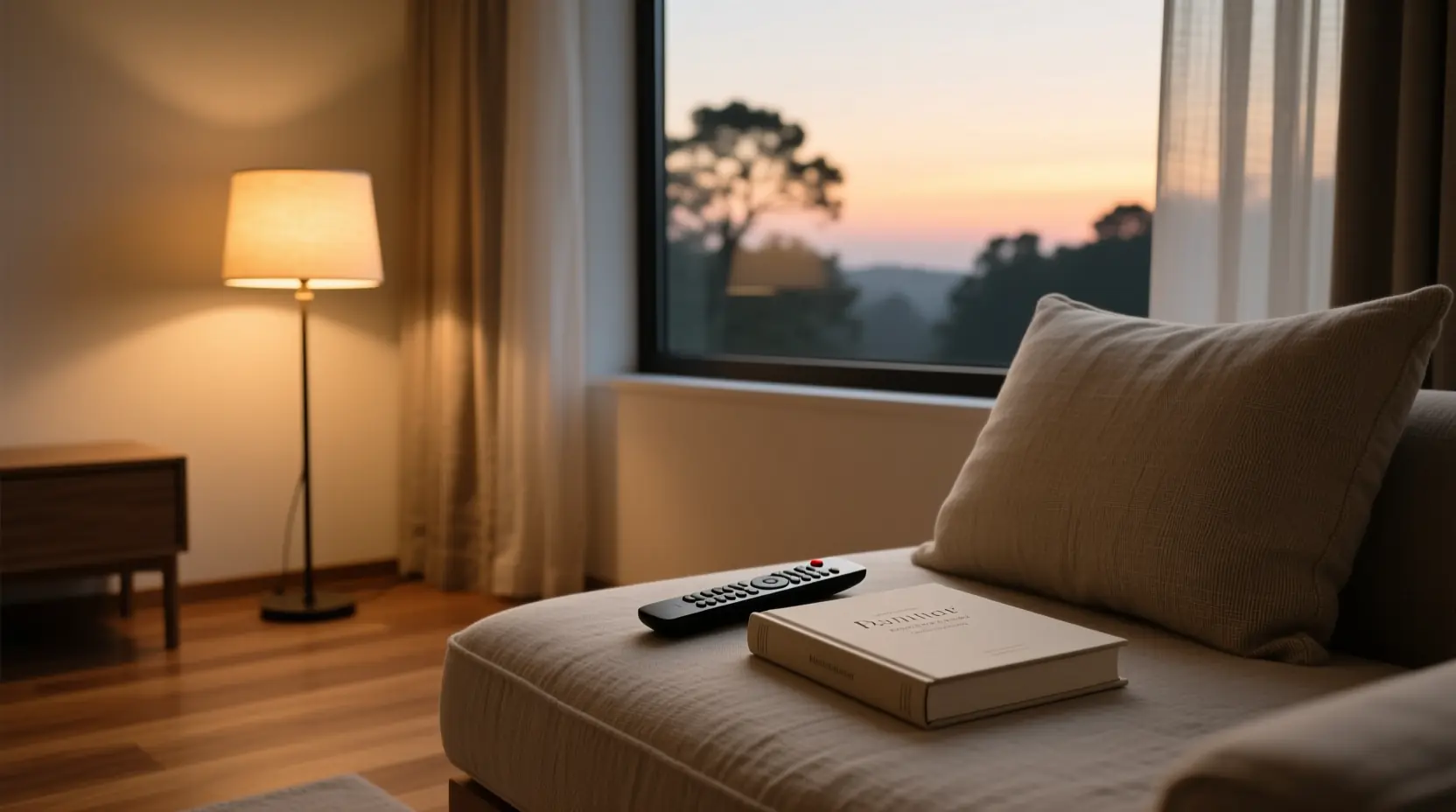
A well-considered companion app is not a replacement, but a spare key. It is the thoughtful redundancy of the luxury inn: the second robe, the extra blanket at the foot of the bed. When the physical form is momentarily adrift—nestled in the folds of a throw, keeping company with a sleeping book—the phone in your pocket can assume its duties without friction. No search party, no minor crisis. Just continuity. It is programming made serene, a task for a quiet afternoon, not a frustrated evening.
Legibility in the Low Light
As dusk settles, the object must speak more clearly, not less. Buttons that glow with a soft, lunar radiance—only when touched, only when needed—are a courtesy. They are the nightlight along the baseboard, the subtly illuminated path to the water glass. They honor the sanctity of the dark. The layout itself must be a map of priorities: ‘Volume,’ ‘Mute,’ ‘Source.’ These are the landmarks. The obscure, the seldom-used, are tucked away, accessible but not imposing. This is hierarchy born of empathy.
The Patina of a Thousand Touches
Luxury is not fragility. It is the confidence of endurance. An object that lives in the hand must be built for the conversation of years.
A Substance That Accepts Time
Look for the language of materials: anodized aluminum that cools the skin, matte polymer that resists the gloss of fingerprints, a battery door that closes with a decisive, satisfying click. The button press should be a soft, tactile confirmation, a quiet ‘yes.’ There should be no rattle, no give, no sense of hollow internals. This durability is a silent vow. It says: I am not a consumable. I am part of the landscape of your calm. I will acquire the faint, honorable marks of use—not wear out, but wear in.
Harmony: The Final, Unspoken Feature
In the end, the highest technology is the one that disappears. It becomes ambient, like perfectly tuned humidity or a scent you only notice in its absence. Voice, when it is a whisper that is heard, can be this—a simple, spoken request to a room that listens. But a voice that misunderstands, that demands repetition, is an intruder. It breaks the silence it was meant to serve.
Choose, then, for the deep breath, not the bright flash. Choose the object that converts many tasks into one intention. It should not command your attention; it should return your attention to yourself, to your companion, to the slow turn of the evening.
For the essence of a sanctuary is reliable, effortless calm. It is the knowledge that everything has its place, and every need is met with a gracious, almost pre-emptive, ‘yes.’ The right remote ceases to be a controller. It becomes the quiet key. It rests on the table not as an instruction, but as an invitation—a small, tangible promise that here, you may finally lay down the burden of operation. You may simply be. The room is ready. The rest, as they say, is already at your fingertips.