The Whisper After the Door Closes
There is a breath, held and then released, when a journey ends. The lock clicks, a final, soft punctuation. The outside world recedes. Here, in the quiet, a space begins to speak. Not in declarations, but in textures. The cool, certain arc of a switch. The deliberate weight of a curtain pull in the hand. These are the first syllables of welcome. In this sanctuary, the objects we use are not tools, but extensions of intent. They are the silent grammar of care. And so we consider perhaps the most humble—the remote. Its choice is not a technical debate. It is a quiet question of philosophy. How shall this room greet you?
The Elegance of a Single Note
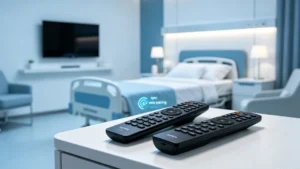
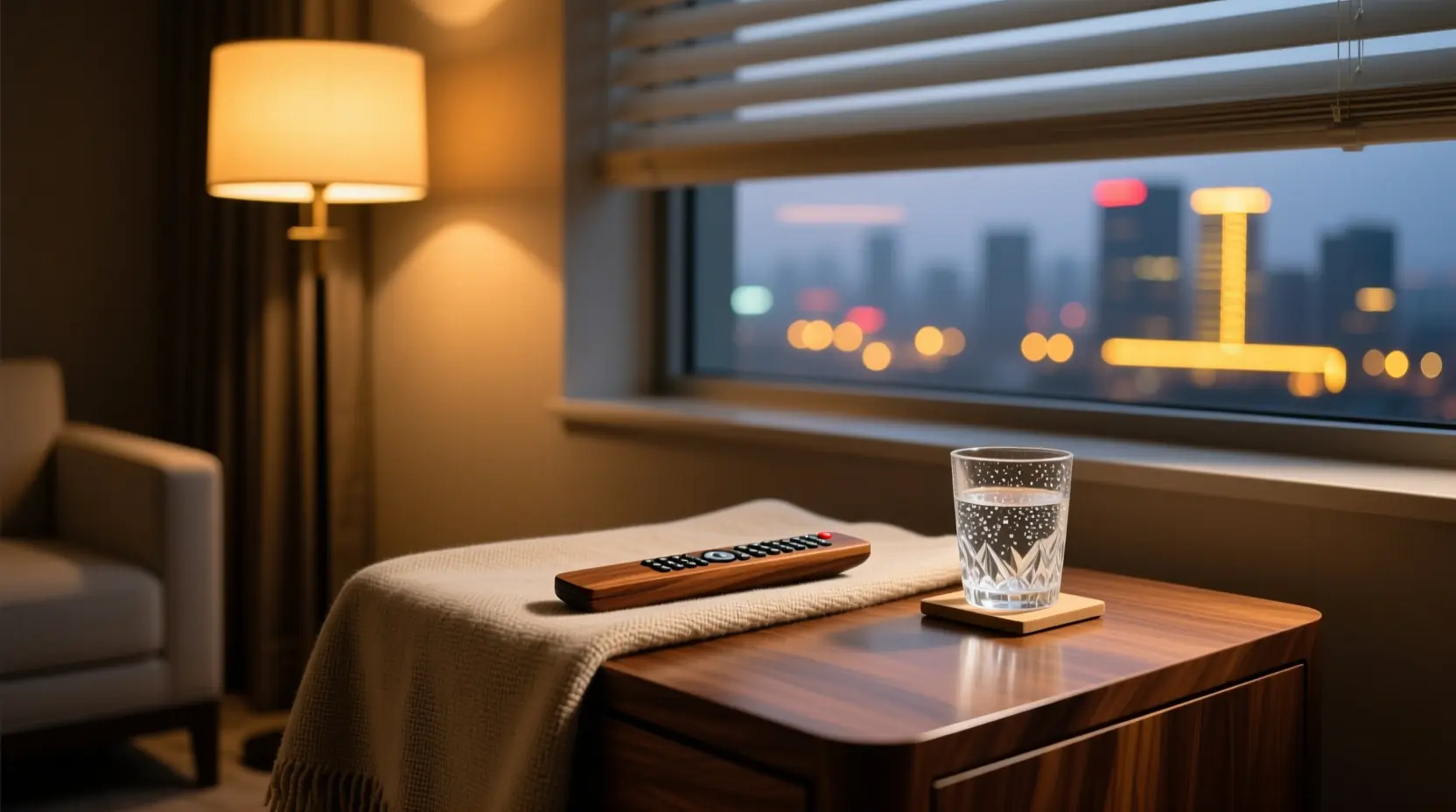
Consider the traditional companion. It rests on bare wood or linen, a known silhouette against the grain. Its buttons are a topography learned by thumb in the dark. It asks for a clear line, a direct gaze. Its language is a beam of silent light. There is virtue in this singularity. It does not announce. It waits.
In a room curated for thought, this limitation breathes. It is an agreement. A physical gesture—the arm extending, the wrist turning—begets a specific, intended response. The act of pointing becomes ritual. A conscious shaping of light, of sound. The object itself, when considered, carries a pleasing heft. A matte polymer, fine-grained, resisting the cold gloss of fingerprints. Or a softly textured rubber, nestling securely in the traveler’s palm. It feels intended. And in that intention, a subtle assurance settles. Everything obeys a clear, simple logic. Everything is in its right place.
Yet true hospitality lives in the unspoken. In the bath drawn before the weariness is acknowledged. The empty glass noticed before it is raised. Here, the traditional remote, dignified in its simplicity, may hesitate. It requires articulation. The finding. The aiming. The separate command for each light, each speaker—a chorus waiting for a single conductor.
The Unseen Current
Enter the silent concierge. It does not speak in beams, but on unseen currents—radio frequency, Wi-Fi—like a gentle breeze that needs no open window to stir the air. Its purpose is not response, but orchestration.
Imagine. From the same cherished weight in your hand, a single, beautifully recessed button: Evening Repose.
In one breath, the blinds descend with a hushed sigh. The main lights dim to a soft, amber pool. A single reading lamp blooms by the chair. The screen silences. From hidden speakers, a curated strand of rain and cello begins to unfurl. You have not directed traffic. You have invoked a mood. The object has not obeyed. It has understood.
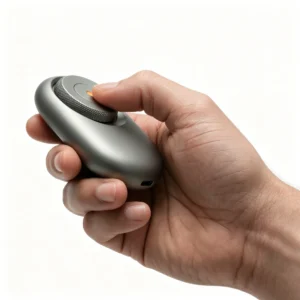
This is seamless utility. The smart remote—cased in materials that speak of longevity, anodized aluminum or ceramic composites that wear their years with grace—becomes less a controller, more a talisman. It gathers the scattered dialects of a space: Bluetooth for the speaker, RF for the shades, Wi-Fi for the lights. It teaches them a common tongue. It remembers your rhythms. It banishes the tyranny of the coffee table litter, the half-dozen black plastic rectangles, each a tiny monument to disunion.
The beauty is not complexity. It is radical simplification. The removal of friction. The erasure of tiny frustrations—the grain of sand in the shoe of ease. A smart remote, at its best, disappears into the background of your intention. It knows you do not wish to “turn on the amplifier, select input three, set volume to forty.” You wish to listen. It grants that wish with a single, intuitive touch.
The Texture of Choice: A Fitting, Not a Verdict
We arrive, then, not at an answer, but a fitting. The choice hinges on the texture of the home you are weaving, the nature of the welcome you wish to extend.
For the spatial designer who finds poetry in pure function, tranquility in restraint, the traditional remote can be the perfect, silent partner. A dedicated object, beautifully made. It asks only for clear intention. It suits a space where technology is not celebrated but seamlessly integrated, where every interaction is deliberate, calm. Its wear-resistant materials promise it will age alongside the linen sofa, the oak floor—a testament to things that do one thing flawlessly.
For the innkeeper of their own domain, who sees the home as a living ecosystem of comfort, the smart remote becomes an indispensable ally in the art of anticipation. It is the tool for crafting scenes—Morning Light, Cinéma, Fireside Reading—that transform a house into a sanctuary that knows you. It solves practical puzzles (the device in the closed cabinet, the light from another room) with such elegant invisibility you forget they were puzzles at all. Its premium feel in the hand is a promise: this is the last. It is the steward of your atmosphere.
A Shared Higher Purpose: The Grace of Receding
In the end, both objects, when chosen with care, share a common purpose. To recede.
The finest remote control, whether whispering on an infrared beam or humming on a radio wave, is the one you cease to think about. It becomes an extension of your will. A natural intermediary between your desire for comfort and the room’s capacity to provide it.
It should feel, as all the best tools in a welcoming space do, like it belongs. Not as technology, but as a piece of the whole. Like a perfectly weighted door handle. A flawlessly dampened drawer glide. Its luxury is found in its absence of insistence.
It serves. It anticipates. It simplifies.
And then it disappears.
Leaving you not with the satisfaction of operating a machine, but with the deep, quiet contentment of being truly, thoughtfully, at home. For the finest hospitality is never about the object. It is about the undisturbed peace it delivers, silent and sure, into the palm of your hand.