In the Space Between Noises
There is a certain kind of silence in a room where someone has found peace. It is not an empty silence. It is a full one. The rustle of a blanket. The slow turn of a page. The soft hum of a lamp. And sometimes, the gentle click of a channel changing.
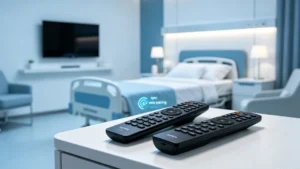
For those of us who care—who craft spaces of comfort—we know it is not about the noise. It is about the space between the noises. The space where dignity lives. And in that space, something as humble as a television remote can become a quiet companion. A gateway to the world. A simple key to a simple pleasure.
It seems so small, doesn’t it? A plastic rectangle on a side table. But for hands that have held so much—tools, children, lifetimes—a modern remote can feel like a stranger. Tiny buttons that crowd together like whispering secrets. Symbols that swim before weary eyes. A complexity that demands more than it gives.
This is where we must begin. Not with technology. But with touch.
The Grace of a Button Made for a Finger
Imagine, for a moment, the pad of your thumb. Now, think of a smooth, generous pea. This is the size and the spirit of a button made not for speed, but for certainty. It is a landing pad for a finger that may tremble. It is a moon, round and clear in a dark sky of plastic.
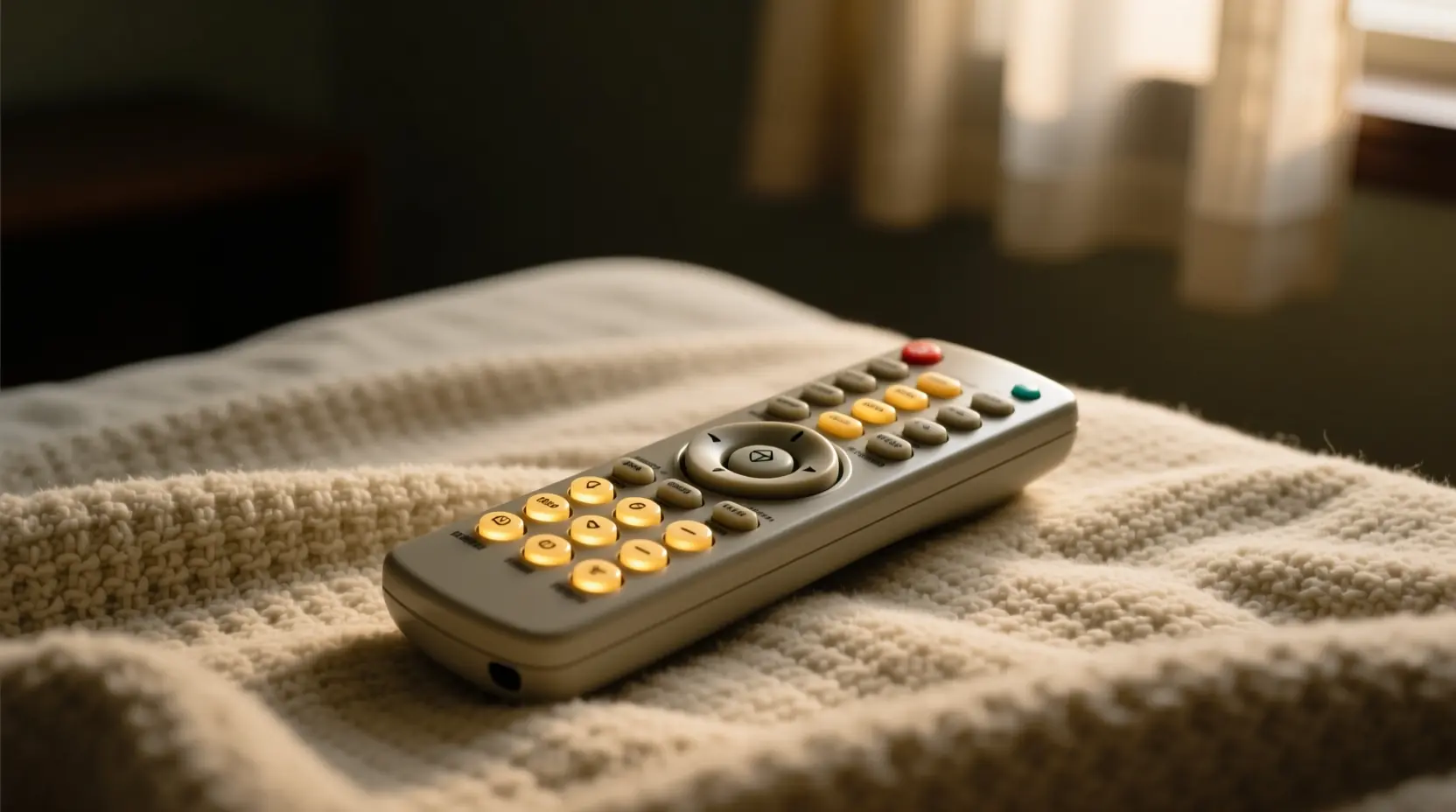
These are the buttons on a remote designed for quiet living. They are not just large; they are thoughtful. They are crafted from a soft-touch resin, a material that feels warm, not cold. It resists the chill of a room. It is anti-microbial, a silent guardian against the unseen. Its surface is a gentle matte, not a glaring gloss. It does not shout under the lights. It simply waits. Ready.
And the space between them—ah, the space. There is room to breathe. Room for a finger to find its way home without stumbling into a neighbor. The most important buttons—Power, Volume, Channel—they rise like gentle hills above the rest. They can be found by touch alone. By memory in the skin.
This is not an accident. It is a kindness.
The Light That Guides, Not Glares
Evening comes. The great lamp is turned off, and the room settles into the soft glow of the television. This is when a standard remote becomes a constellation of tiny, piercing stars. Blue, red, green—a dazzling puzzle.
But the remote we speak of understands the sanctity of the evening hour. Its backlight, when needed, is a soft, golden hue. It illuminates just enough. It is a lantern, not a flare. It says, “Here I am,” without disturbing the peace of the room. It respects the transition from day to night. From activity to rest.
And the labels. Black on white, or white on black. The highest contrast. The numbers are not slim, modern fonts. They are stout, familiar, legible. Like the print in a well-loved book held under a good light. They do not require squinting. They do not demand. They simply are. Clear. Present. Trustworthy.
One Purpose, Done Beautifully
Some remotes boast of controlling everything. The TV, the soundbar, the streaming box, the lights. They are maps of a complicated world.
But in a space of healing and comfort, complexity is not a feature. It is a burden. The most beautiful remote often controls only the television. It is a dedicated friend. It has one purpose: to bring the world into the room. News from a hometown. A favorite game show. The soothing colors of a nature documentary. The comfort of a familiar face.
With this remote, there is no “input” button to navigate. No hidden menus that lead to confusion. Just Volume Up, Volume Down. Channel Up, Channel Down. A keypad for direct entry, for those who still love the ritual of typing in “7” for the evening news.
This simplicity is a form of recovery. It is the recovery of a simple action. I press this, and the thing happens. There is a deep, human reassurance in that. It rebuilds a sense of agency. “I can still do this.” In a world that may feel increasingly out of one’s own control, this small, reliable action is an anchor.
The Reassuring Weight of a Reliable Thing
Pick it up. Feel it in your palm. It has a pleasant weight to it. It does not feel cheap or flighty. It sits solidly in the hand. It will not slip easily from a loose grip. This weight is a quiet reassurance. It says, “I am here. I am substantial. I will not fail you.”
Its edges are rounded. Smooth. There are no sharp corners to dig into a palm or catch on a sweater sleeve. It is a pebble worn smooth by a river of consideration. It fits. It feels considered. It feels, in the best way, like a tool. Like something made by human hands for human hands.
And it is sturdy. If it is dropped—as things sometimes are—it does not shatter into a confession of fragility. It may tumble with a soft thud to the carpet. You pick it up, wipe it with a cloth, and it continues. Uncomplaining. Resilient. A companion that can endure a small accident without drama.
The Quiet Gift of Unspoken Independence
This, perhaps, is the heart of it all. The true beauty of this simple object.
When a person can turn on their own television. When they can adjust the volume to their own liking, without calling for help. When they can surf the channels during a quiet afternoon, following their own curiosity… this is a daily, quiet victory.
It is a preservation of self. It is a declaration: “This is my space. These are my choices.” It wards off the slow creep of helplessness. It keeps a thread of connection to the rhythms of the wider world—to the seasons, to the news, to the stories—on one’s own terms.
For the caregiver who sees this, it is a moment of grace. It is one less thing to manage. One less request to answer. It frees your hands and your heart for the things that truly require your touch—a hand held, a story listened to, a pillow fluffed. The remote ceases to be a point of friction and becomes a bridge. It handles the practical, so you can focus on the personal.
A Bridge for Shared Moments
And then, there are the moments it fosters. A visitor—a grandchild—can pick up this remote and understand it instantly. There is no teaching, no fumbling. “Here, let me find that for you.” The simplicity of the device allows the interaction to be about the person, not the technology. It allows a shared laugh at a comedy, a shared silence during a beautiful piece of music. It does not get in the way.
It is, in its gentle way, a tool for connection.
In the end, we are talking about more than a device. We are talking about a philosophy of care, held in the palm of your hand. It is a philosophy that values clarity over clutter, warmth over coldness, dignity over dependence. It understands that the tools we surround ourselves with should soothe, not stress. They should empower, not embarrass.
In a quiet room, amid the soft light and the comfortable chairs, a simple, well-made remote control is a small beacon of autonomy. It is a quiet companion for the journey. A gentle, reliable friend that says, without words, “I am here to help. The choice, as it always should be, is yours.”
And in that gentle click, heard in the space between the noises, there is a world of peace.