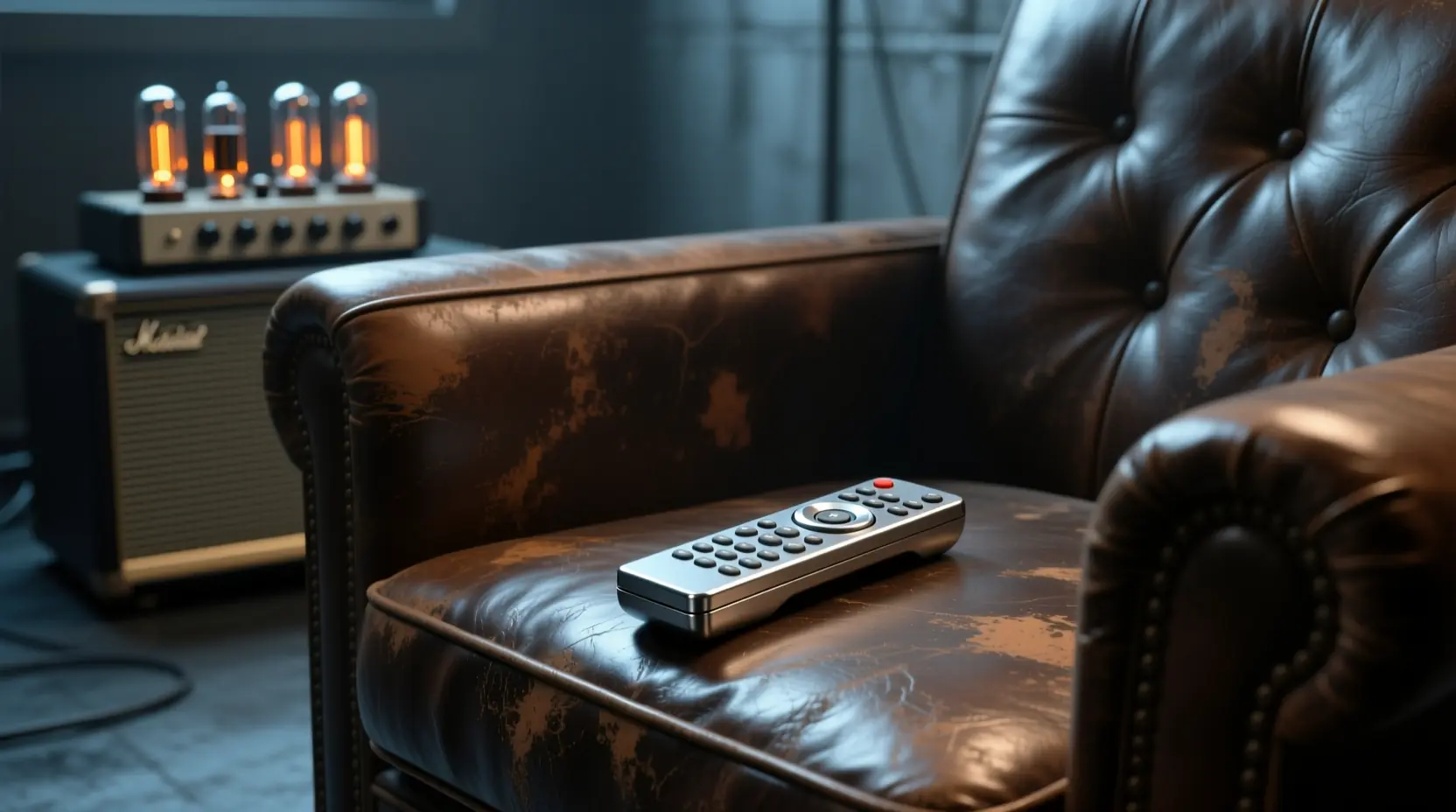
The Silent Conductor: Why Your Hi-Fi Setup Needs a Premium RemoteIn the sanctuary of a dedicated listening room, every element contributes to the atmosphere of reverence.
We spend hours obsessing over speaker placement, tube rolling, and cable resonance — yet we often settle for a cheap, lightweight plastic remote control — a jarring, synthetic note in an otherwise analog symphony.
For the discerning audiophile, the interface between the human hand and the amplifier is not merely a convenience — it is a ritual.
Upgrading to a premium hi-fi remote control is the final, often overlooked step in completing your audio setup. It is about restoring the tactile authority that vintage equipment demands.
Why Your Audiophile Setup Deserves a Better RemoteA high-end amplifier is a monolith of precision: heavy knurled knobs, damped levers, and brushed aluminum. Your remote should speak this same physical language.
Replacing a brittle, clicking plastic controller with one crafted from brushed aluminum, cold-rolled steel, or solid walnut transforms the act of adjusting volume into a meditative experience.
It’s not about controlling sound — it’s about respecting it.
The Two Paths to Audio PurityWhen seeking an upgrade, there are two primary philosophies for the modern audiophile:
1. The Wired Analog Connection — For Signal PuristsFor those pursuing the ultimate signal purity, a dedicated, heavy-duty wired volume knob is the gold standard.
By connecting directly to your amplifier’s auxiliary or remote ports, you eliminate digital interference entirely.
It provides a direct mechanical extension of the amplifier’s own potentiometer — offering a viscous, smooth sweep that is impossible to replicate with plastic buttons.
- Ideal for: Tube amps, analog preamps, vintage gear, audiophiles who value signal integrity over convenience.
2. The Artisan Learning Remote — For Modern FlexibilityIf a wired connection is not feasible, look for a “learning remote” built with audiophile-grade materials.
Focus on models featuring high-quality micro-switches damped by silicone discs. These provide a profound, silent “thud” — not a sharp click — allowing you to control your system without breaking the spell of the music.
- Ideal for: Modern integrated amps, streaming systems, multi-room setups, audiophiles who want tactile feedback without sacrificing convenience.
The Philosophy of Minimalism — Clean, Intuitive, TactileIn a dimly lit listening room, your hand should instinctively know the controls.
An ideal remote avoids the cluttered grid of television controllers. Look for:
- Weighted Integrity — A remote that sits in the palm with solemn gravity. Not flimsy. Not cheap. Substantial.
- Intuitive Layout — A central, knurled metal volume wheel surrounded by essential, well-spaced buttons. No unnecessary clutter.
- Tactile Texture — Distinct textures that allow you to distinguish functions by touch alone. A smooth surface for mute. A ridged wheel for volume. A matte finish for power.
This is not a remote — it’s a tool of focus. A bridge between your intention and the sound.
The Guardian of the Ritual — When the Remote DisappearsUltimately, the perfect remote is one that disappears — not through absence, but through seamless integration.
When you hold an object of substance and precision, it grounds you. It shifts your mindset from the digital noise of daily life to the focused intensity of deep listening.
By choosing a remote that respects the craftsmanship of your amplifier, you remove the last point of friction between your intention and the sound.
When the music finally fills the room, the remote should be forgotten — leaving only the direct, unimpeded connection to the art.
How to Choose the Right Hi-Fi Remote Control (Procurement Guide)
If you’re an audiophile, a home audio installer, or a boutique audio retailer — here’s your quick procurement checklist:
- Material Matters — Avoid plastic. Choose brushed aluminum, stainless steel, or solid wood. It should feel like part of your system.
- Switch Type — Silicone-damped micro-switches are preferred. They offer silent, tactile feedback — no “click,” just “thud.”
- Wired vs Wireless — If purity is your goal, go wired. If flexibility is key, choose a learning remote with low-latency IR or RF.
- Ergonomics — Does it fit your hand? Is it weighted for balance? Does it feel like an extension of your amplifier?
- Compatibility — Does it work with your preamp, integrated amp, or streaming device? Check manufacturer specs or use a “learning remote” to adapt to any system.
- Aesthetic Harmony — Does it match your vintage gear? Your modern minimalist setup? Your analog-focused listening room?